

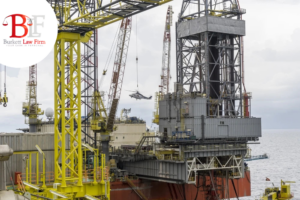
Offshore rigs and platforms in the Gulf are among the most dangerous workplaces in America. Heavy equipment, high pressure, long shifts, and rough water leave no room for error. When companies cut corners, workers pay the price.
If you were hurt on an offshore rig or platform, The Burkett Law Firm can help. We have fought for injured Coastal Bend workers since 1960 and recovered more than $80 million. Get a free case review or call 361-882-8822. Hurt at an onshore site instead? Visit our oilfield accident lawyer page.
14.2 Oil and gas worker deaths per 100,000 workers — nearly 4× the average for all private industry (3.7) | 26.8% Of oil and gas extraction deaths involve vehicle incidents; 21.7% involve contact with equipment; 14.5% involve explosions | 7× Offshore workers are about seven times more likely to die on the job than the average U.S. worker |
Sources: U.S. Bureau of Labor Statistics (2022); NIOSH Fatalities in Oil and Gas Extraction database (2014–2019); CDC/BLS offshore data | ||
Common Causes of Oil Rig Accidents
Most rig accidents are not freak events. Investigations usually reveal the same root causes: skipped maintenance, rushed schedules, missing guards, poor training, and crews pushed past exhaustion. Federal safety rules exist to prevent every one of these. When a company breaks those rules and a worker gets hurt, that is negligence — and negligence has a price.
- Explosions and fires
- Struck-by and caught-between equipment accidents
- Falls from heights or on slick decks
- Dropped loads and crane failures
- Toxic exposure and burns
- Transport accidents getting to and from the rig
Common Oil Rig Injuries
Rig accidents rarely cause minor injuries. We regularly handle:
- Traumatic brain injuries
- Spinal cord injuries and paralysis
- Severe burns and crush injuries
- Amputations
- Fatal accidents — see our wrongful death page
Your Legal Rights After an Offshore Rig Accident
Offshore injury claims follow federal maritime law, not ordinary Texas law. Your rights depend on your job and the rig’s location:
Jones Act Claims
Crew members of vessels — including many workers on jack-up rigs and drillships — can sue their employer for negligence under the Jones Act. Learn more from our Jones Act lawyers.
Maritime and Platform Claims
Workers on fixed platforms and other offshore sites may have claims under general maritime law, the LHWCA, or the Outer Continental Shelf Lands Act. Third parties — like contractors and equipment makers — can also be liable.
Compensation Available to Injured Rig Workers
- All medical care, now and in the future
- Maintenance and cure benefits (for seamen)
- Lost wages and reduced earning capacity
- Pain and suffering
- Death benefits for families
★★★★★ “Professional Law Firm you can trust. Friendly and caring Attorneys and Paralegals who will do right by you.” — Mary Jane V., Burkett Law Firm client
How The Burkett Law Firm Fights for Rig Workers
Oil companies investigate accidents within hours — to protect themselves, not you. We move fast to preserve the evidence: maintenance logs, safety records, witness statements, and inspection reports. Then our trial lawyers, led by David Burkett, build the strongest possible case and demand full value.
Who Can Be Held Liable for an Oil Rig Accident?
Offshore operations involve many companies at once. More than one may owe you compensation:
- The operator that controls the rig and its safety practices
- Drilling and service contractors whose crews or procedures caused the accident
- Equipment manufacturers that made defective tools, valves, or rigging
- Vessel owners whose unseaworthy boats or rigs caused injury
- Transport companies responsible for crew boat and helicopter accidents
Each defendant points at the others. We untangle the contracts and hold every responsible party accountable.
What to Do After an Oil Rig Accident
- Report the incident and make sure it goes in the log — no matter how much pressure there is to keep it quiet.
- Get real medical care, not just a company medic sign-off.
- Photograph the scene and equipment if you safely can.
- Get witness names before crews rotate off.
- Say no to recorded statements and quick releases.
- Call a lawyer — company investigators started working the case the day you were hurt.
Why Acting Fast Matters in Rig Cases
Offshore accident evidence has a short shelf life:
- Rigs keep drilling. The scene changes within hours as operations resume.
- Crews rotate. Witnesses scatter to other rigs, states, and countries within weeks.
- Records get “cleaned up.” Maintenance logs and safety reports look different after the company’s lawyers review them.
The company’s investigators were likely on the case the same day you were hurt. Every day you wait widens their head start. A preservation letter from our firm legally locks down the logs, video, and data before they can disappear — and it costs you nothing to get that protection started.
Oil Rig Accident FAQs
The company wants me to give a recorded statement. Should I?
Not before talking to a lawyer. Early statements are often used to shift blame onto workers. Get advice first — the consultation is free.
Can I sue if I was partly at fault?
Usually yes. Under the Jones Act and maritime law, your recovery may be reduced by your share of fault, but partial fault does not bar your claim.
How long do I have to file?
Most maritime injury claims must be filed within three years, but some deadlines are much shorter. Act quickly to protect your rights.
What if the company blames me for the accident?
Expect it — shifting blame lowers what they pay. Under maritime law, partial fault reduces a recovery but rarely eliminates it. And safety violations by the company often outweigh anything a worker did.
I signed paperwork after the accident. Is my case over?
Not necessarily. Releases signed under pressure, without counsel, or without fair value can sometimes be challenged. Bring us whatever you signed and we will review it for free.
Talk to a Corpus Christi Oil Rig Injury Lawyer Now
One call can protect your health, your income, and your family. Call 361-882-8822 or schedule a free consultation with our injury team today.



