

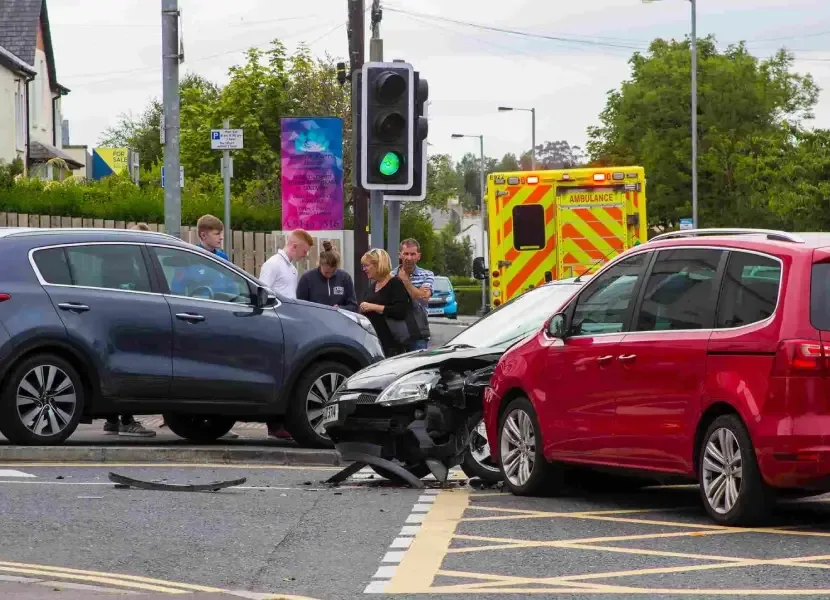
If you were hit by someone driving a company car, van or pickup, the employer may be legally responsible for your injuries, not just the driver. That matters because businesses usually carry commercial auto policies with far higher limits than an individual driver. Whether the employer is liable depends mainly on one question: was the driver acting within the course and scope of the job when the crash happened? The Burkett Law Firm handles company vehicle crash claims throughout Corpus Christi and the Coastal Bend, and we know how employers and their insurers try to avoid responsibility.
When is an employer responsible for an employee’s crash?
Texas follows a rule called respondeat superior. Under it, an employer is responsible for an employee’s negligence when the employee was acting within the scope of employment, meaning the employee was doing the employer’s work, in furtherance of the business, when the crash occurred. Typical examples include:
- A delivery driver on a route
- A service technician driving between customer calls
- A sales representative driving to a client meeting
- A construction or oilfield worker driving a company truck between job sites
- An employee running an errand at a manager’s request
The employer can be liable even if it did nothing wrong itself. It steps into the employee’s shoes for the purposes of the claim.
Does it help that the vehicle belongs to the company?
Yes. Texas courts generally presume that when a vehicle is owned by an employer and driven by an employee, the employee was acting within the course and scope of employment. The employer can try to rebut that presumption with evidence that the driver was on a personal errand, but the burden shifts to the company to explain why. Ownership records, fleet policies and GPS data often become important evidence.
What if the employee was driving to or from work?
Ordinary commuting usually falls outside the scope of employment under what is called the coming and going rule. There are important exceptions, though:
- Special missions: if the employer directed the employee to make a trip or stop on the way, the trip may be covered.
- Travel as part of the job: employees who have no fixed workplace and travel between sites as part of their duties are often covered.
- Employer-provided transportation: when transportation is part of the job arrangement, the trip may be covered.
Personal detours, such as stopping for dinner with friends after work, often fall outside the job. Each case turns on its facts.
Can the employer be liable for its own negligence?
Yes. Even when the employee was off the clock, an employer can be liable for negligent entrustment if it let someone it knew or should have known was an unsafe driver use its vehicle. Examples include giving a company truck to an employee with a suspended license, multiple recent crashes or a history of drunk driving. An employer can also be negligent if it failed to maintain the vehicle and a mechanical problem caused the crash.
Employers can also create danger through the way they run the job. A business that sets delivery quotas so tight that drivers must speed, requires employees to answer calls and texts while driving, or pushes workers to drive after a double shift may share responsibility for the crash that follows. Company policies, schedules and supervisors’ messages can show whether the employer encouraged unsafe driving. When a commercial truck or a vehicle over a certain weight is involved, federal and Texas motor carrier safety rules also apply, and a violation of those rules can be evidence of negligence by the company.
Whose insurance pays in a company car crash?
In a typical case, the employer’s commercial auto policy is the primary coverage when the employee was on the job. Some businesses also carry umbrella or excess policies. If the employee was using a personal car for work, the employee’s own policy may pay first, and the employer’s hired and non-owned auto coverage may apply as well. Your own policy can also help: personal injury protection pays medical bills and lost wages regardless of fault if you carry it, and uninsured and underinsured motorist coverage can fill gaps when the at-fault driver’s coverage is too small.
How do employers try to avoid liability?
Expect the employer or its insurer to argue that the driver was on a personal errand, was an independent contractor rather than an employee, or was violating company policy at the time. Violating a policy does not automatically take conduct outside the scope of employment, and labels such as independent contractor are not decisive. Courts look at who controlled the details of the work. Evidence we often gather includes:
- GPS and telematics data from fleet vehicles
- Work orders, delivery logs and dispatch records
- Time cards, phone records and texts with supervisors
- Company vehicle use policies and the driver’s personnel file
- Contracts showing whether the driver was an employee or contractor
What if the driver works for a rideshare or delivery app?
Drivers for Uber, Lyft, DoorDash, Amazon Flex and similar apps are usually classified as independent contractors, and the insurance available depends on what the driver was doing at the moment of the crash. Texas law requires transportation network companies to provide coverage when a driver is logged into the app, with higher limits once a ride has been accepted and while a passenger is in the car. Delivery apps have their own policies, which vary by company and by whether the driver was carrying an order. Commercial delivery vans driven by employees of a delivery service partner are usually covered by that company’s commercial policy. Getting the app records and the driver’s status at the time of the crash is often the key to finding the right insurance.
How long does a company vehicle claim take?
Many claims against businesses resolve within several months after the injured person finishes treatment, once the medical bills and future needs are clear. Cases take longer when the company disputes whether the driver was on the job, when the injuries are permanent, or when a lawsuit is needed to get the employer’s records. Moving quickly at the start, especially to preserve GPS and dispatch data, usually shortens the case rather than lengthening it, because it removes room for argument about where the driver was and why.
What should you do after being hit by a company vehicle?
- Call 911 and get the police report number.
- Photograph the vehicle, including any company name, logo, fleet number and license plate.
- Ask the driver who they work for and where they were going, and write it down.
- Get medical care and follow up with your doctor.
- Do not give a recorded statement to the company’s insurer before getting advice.
What compensation can you recover?
Injured people can recover medical expenses, lost wages and earning capacity, pain, mental anguish, physical impairment, disfigurement and property damage. Texas reduces your recovery by your share of fault and bars recovery if you are more than 50 percent at fault. Most claims must be filed within two years.
Frequently asked questions
What if the driver was a government employee?
Claims against government entities fall under the Texas Tort Claims Act, which has short notice deadlines and damage caps. Talk to a lawyer quickly.
Can I sue both the driver and the company?
Yes. Both can be named, and the evidence will decide how responsibility is assigned.
What if the company says the driver was an independent contractor?
That label is not the final word. Courts look at who controlled the work, and the company may still be liable for its own negligence.
How much does it cost to hire The Burkett Law Firm?
Nothing up front. We handle injury cases on contingency, so there is no attorney fee unless we recover for you.
Talk to a Corpus Christi car accident lawyer
If a company vehicle hit you, call The Burkett Law Firm at 361-882-8822 for a free consultation. Our Corpus Christi car accident lawyers will find out who the driver was working for and make sure the right insurance pays.
